· 3 min read
How much does a WiFi hotspot make? Real numbers and a way to calculate
Three concrete scenarios — neighbourhood shop, hotel, cybercafé — with assumptions, break-even point and levers to double revenue without changing your connection.
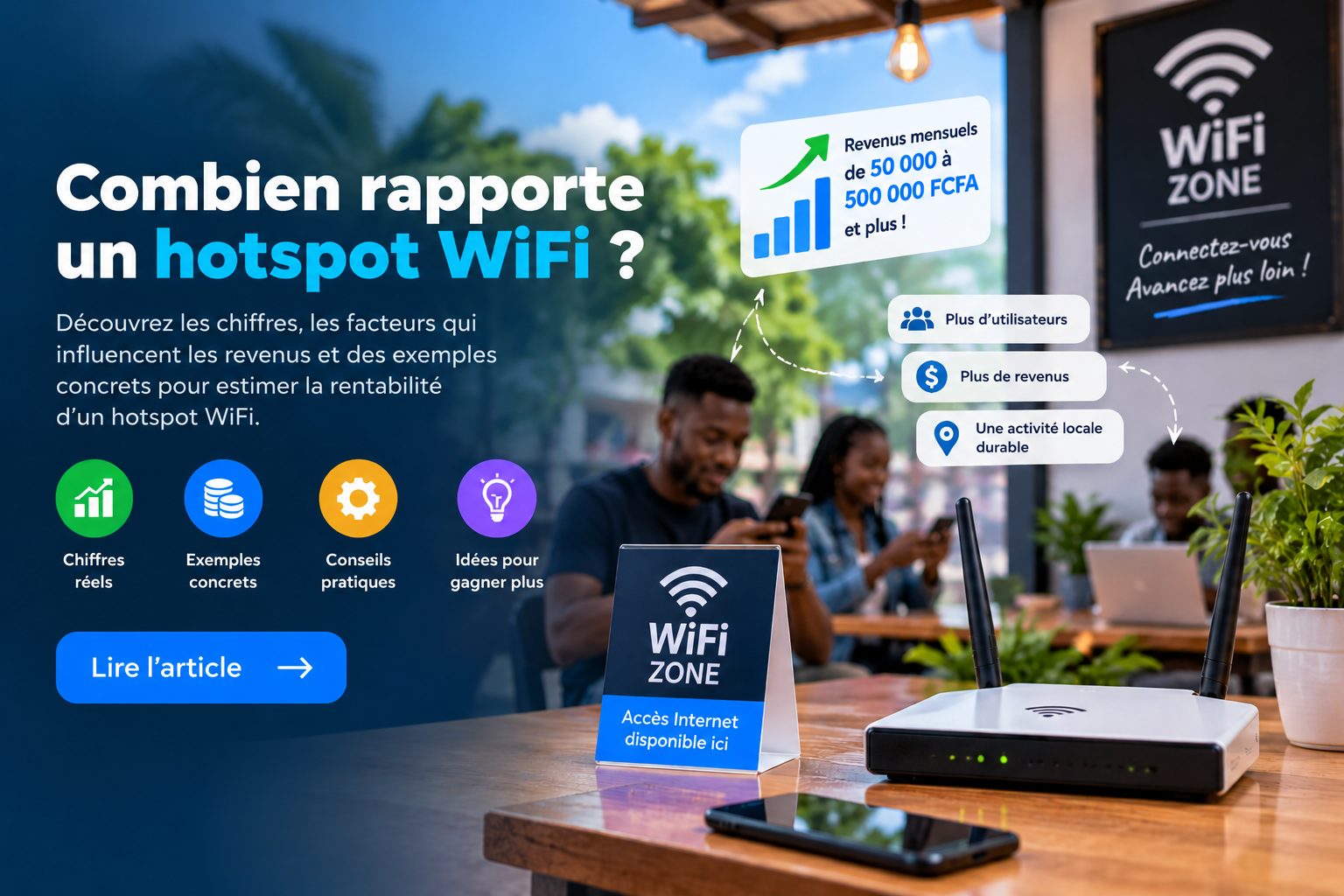
"Is it worth it?" That's the first question. Here's a simple method and three examples to answer it with numbers, not promises.
The formula
Monthly revenue ≈ paying customers per day × average spend × 30
It all comes down to two numbers: how many customers pay per day and how much they spend on average. The rest (hardware, power, connection) are fixed costs you cover quickly.
Scenario A — Neighbourhood shop
- Location: shop on a busy road, shared courtyard next door.
- Connection: 10–20 Mbps.
- Plans: a 30 min pass, a day pass, a week pass.
- Observed reality: 25 to 40 sales per day, average basket around a quarter of the day-pass price.
Gross revenue is several times your fixed costs (connection + power + router depreciation). The router pays for itself in 3 to 5 weeks.
Scenario B — Hotel / serviced apartments
- 20 to 40 rooms, limited free WiFi + paid plans (high speed, full stay, multi-device).
- Higher basket, lower volume.
- Reality: 8 to 15 sales per day at a solid average basket.
Revenue lands with almost no front-desk handling if the portal collects on its own. Bonus: fewer "the WiFi doesn't work" complaints, because each access is named and traceable. See paid hotel WiFi mistakes.
Scenario C — Cybercafé
- WiFi becomes a second product line: customers come with their own phones.
- Short plans, fast rotation: a 15 min pass, an hourly pass.
- Reality: 30 to 60 sales per day at a low average basket.
That revenue adds to your workstation income, with no extra floor space or staff.
The break-even point
Add up your monthly fixed costs (connection + power + 1/12 of the hardware price). Divide by your average basket: you get the number of sales per month to break even. In all three scenarios, you reach it in less than a week of trading.
Five levers to raise revenue
- Lift the average basket: push the day pass over the hourly one.
- Sell subscriptions: week and month paid upfront = cash flow + loyalty.
- Cut fraud: one access = one payment. Code sharing costs you 20 to 40% of revenue.
- Cover more ground: one extra access point = new customers who had no signal before.
- Track the numbers: without a dashboard, you're flying blind. Sales tracking shows your quiet hours and your best-selling plans.
What drags the numbers down
- Copied paper codes and untracked cash.
- Uncapped bandwidth: one client saturates, ten leave.
- Too many plans, odd prices (slow to pay by Mobile Money).
- Reselling beyond the line's capacity at peak hours.
Do your own math
Take your day-pass price, multiply by a conservative estimate of daily sales, then by 30. Compare to your costs. If you want help sizing the install, see our solutions and pricing.